Let’s talk
How I can help / Custom builds

CUSTOM BUILD

A custom tool or system.

A custom app, AI agent, or connected workflow built around your business.

When this is useful.

You need more than a single improvement: an application or workflow that brings several moving parts together.

What you leave with.

  • A scoped build with working versions to review
  • Data connections and business rules agreed together
  • Testing, documentation, and handover in accounts you control
  • A handover session, so your team can run it without me

What it could look like.

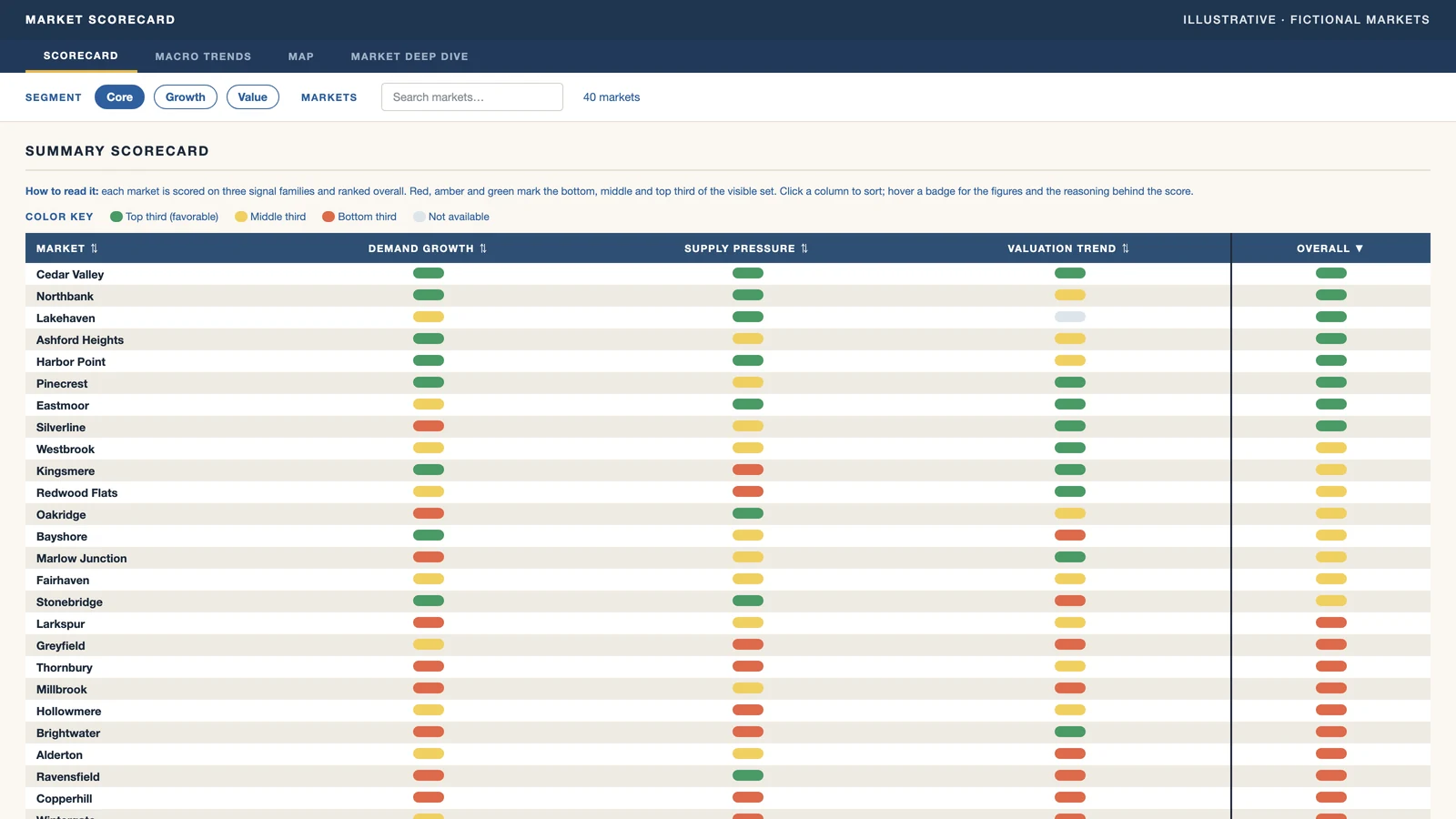
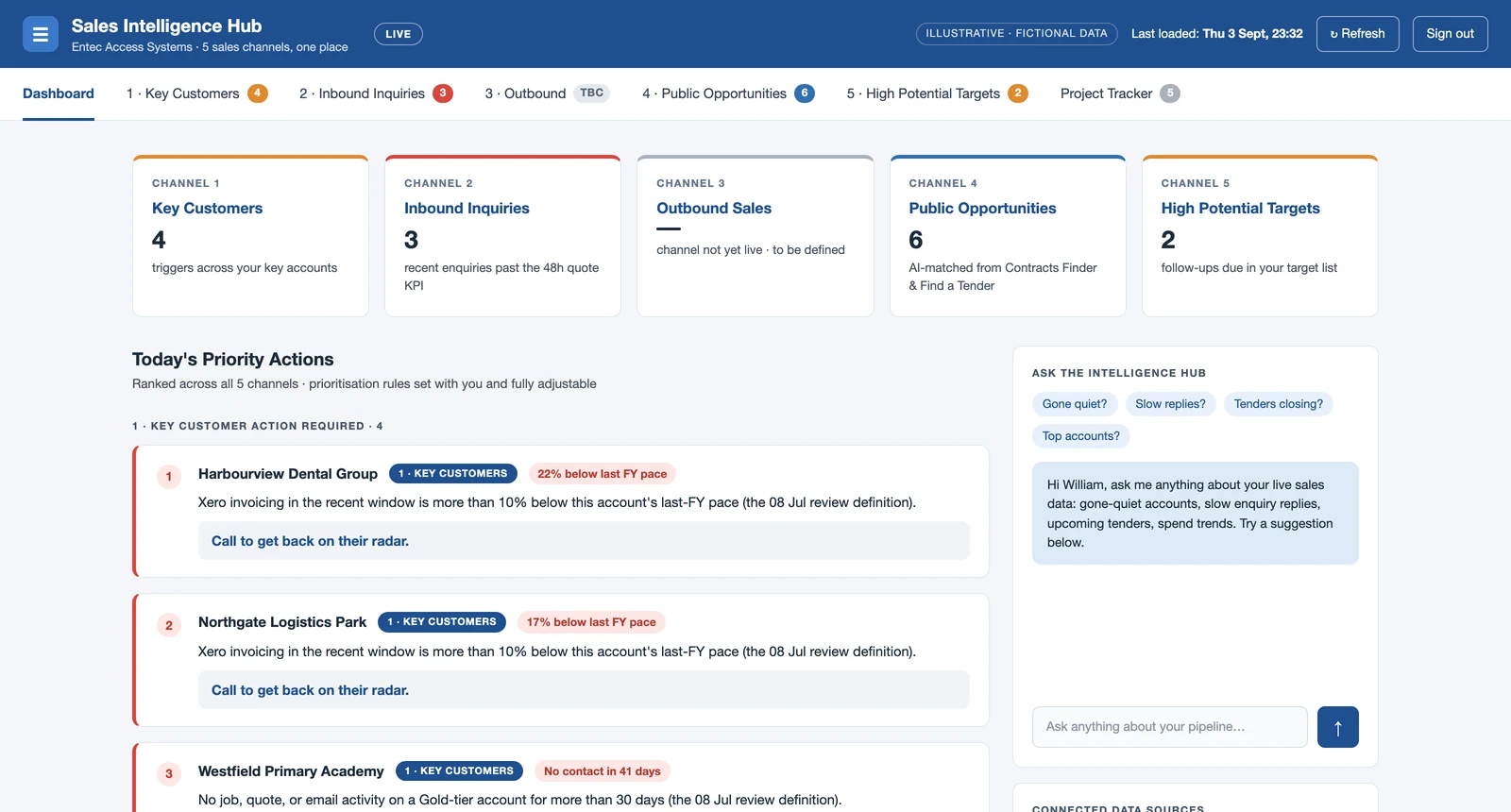
A sales intelligence hubAn interactive financial applicationA connected reporting or research systemA custom AI agent for customer research

A build can combine several data sources with analysis and recommended actions, as in the Entec hub. We agree scope and timing before work starts.

WHAT YOU’RE INVESTING IN

Built around your business,
with AI as one part of it.

The most valuable part of a custom system often isn’t the AI. It’s getting the rules out of people’s heads and into a form the business can use, connecting information across your systems, and agreeing what matters, how it’s calculated, and what should happen next.

Most of that foundation is conventional software: data connections, calculations, business rules, and workflows. AI handles the parts that benefit from interpretation, such as extracting information, assessing relevance, or summarizing correspondence.

That separation matters. As models improve or pricing changes, we can evaluate and update the AI component without necessarily rebuilding the business logic and connections around it. Switching still needs testing, and some changes need development, but the knowledge and structure don’t have to be recreated because a new model arrived.

You’re investing in a system that captures how your business works, with AI as one adaptable part of it.

CONVENTIONAL SOFTWARE

The business foundation

  • Connected business data.
  • Documented rules and definitions.
  • Repeatable calculations and workflows.
  • Access controls and review steps.

AI, WITHIN AGREED LIMITS

Where AI adds value

  • Extracting information from documents.
  • Interpreting unstructured requests.
  • Summarizing relevant context.
  • Assessing relevance against agreed criteria.

These aren’t two separate systems. The foundation gives the AI its context, and conventional code decides what happens with what the AI produces. Both need testing: ordinary code is only as right as the rules we agreed.

In the Entec hub, a better model might improve how the system interprets an inquiry or summarizes a customer conversation. It wouldn’t replace the work of connecting SimPRO, Xero, and Outlook, defining key accounts, or agreeing which follow-ups deserve attention.

CUSTOM AI AGENTS

An agent built around
a specific job.

An agent could research prospective customers and prepare account briefs, or monitor incoming inquiries and draft the next step. I design the workflow around your information and tools, with clear boundaries on what it can do and when it needs your approval.

For example, a customer-research agent could check sources you approve, compare prospects against your criteria, and prepare a brief explaining why an account might be worth a conversation. You review the evidence before deciding who to contact. This is an example of a possible build, not a client case study.

Before launch, we test representative tasks and exceptions, including missing or conflicting information. Ordinary code handles exact calculations and fixed rules; AI handles interpretation where it helps. We agree access limits and approval steps, and keep a record of the agent’s actions so you can check what happened.

The point is to give a small team research coverage it couldn’t previously justify staffing, without handing over its commercial judgment.

GROUNDED IN ACTUAL WORK

See what that can become.

What happens when a better AI model comes along?
The aim is for your system to benefit from better models rather than be replaced by them. Your business rules, connected data, and workflows form the foundation. We use conventional code for calculations and fixed rules, and AI where interpretation is useful. Where practical, we keep that AI component separate so we can assess different models as their capabilities and costs change. Switching still needs testing, and some changes need development, but the knowledge and structure built around your business don’t have to be recreated because a new model arrives.
Can our own people maintain what you build?
Yes, that’s the aim. The rules and connections are ordinary code, the documentation and accounts are yours, and handover includes a session with whoever will look after it. Typical upkeep is small: checking a connection, adjusting a rule, keeping an eye on AI usage. Ongoing support exists for businesses that would rather I do that, or that want to keep adding to the system.
Who owns what you build?
I hand over the code, documentation, and access you need to run the build. I aim to build in accounts you control. We agree third-party tools and any licensing dependencies in the scope.

LET’S TALK

What are you
working on?

You don’t need a technical brief. Tell me what you’re trying to do, and we’ll work out a sensible next step.

Tell me what you have in mind